It came to pass late one afternoon, in the transitional moments before twilight, just as the sun was caressing the horizon, that Shekinah was strolling through the garden. She was carrying a resplendent, glowing alabaster pot, filled with the fire of the breath of creation, on her way to feed the tree of wisdom and the tree of life. Just ahead of her she saw Adam and Eve, and at first she couldn’t fathom what they were doing. Then it dawned on her, they were dressing themselves in fig leaves.
Shekinah was so shocked, she dropped the pot, and it shattered into billions of shards. How did they know they were naked and needed to cover themselves? There was only one possible answer. They had eaten of the tree of wisdom, the tree of the knowledge of good and evil, before the fruit it bore was ripe. They just couldn’t wait. In one, maybe two, more months, the fruit would have been ripe, creation would have evolved a bit more, they would have grown in knowledge and wisdom themselves. Things would have been so different.
Shekinah tried to tell Yahweh that giving them a prohibitive commandment wouldn’t work. She argued that it would have been better to explain the ripening process to them, to help them understand it was not “no, never” but rather, “no, not just yet.” But now the fruit of the pomegranate tree will never ripen. Now, Adam and Eve will have to face the consequences of their actions. Now, all of humanity to come will have to devote their lives to the repair of the world, regathering the fire of the breath of creation through acts of mercy and justice, working to find the balance between those two kinds of good works.
(Smith: to work with something by heating, hammering, and forging. Myth-Smith: to work with myths by combining, revising, and reshaping.)
Once, before the world as we know it, there was water, wide, deep and vast. The water was populated with fish that swam in its depths, and foul birds that danced on its surface. While the fish swam and the birds flew about and danced on the water, a woman fell through a rift in the sky, tumbling down from the upper world.
As two loons were flying over the waters, they happened to look up and noticed her falling. The loons decided that they could not let her drown, and so they flew beneath her and linked their wings together to form a cushion for her to rest on. While they held her, the loons yodeled and hooted, calling the other animals to aid in their rescue of the woman. All the sea creatures gathered together in response, but it was the great tortoise who consented to relieve the loons of their burden. The loons gently deposited the woman on the back of the tortoise, and the tortoise pledged to care for the woman.
A council of all the sea creatures was called to decide how best to care for the woman, and they decided that she should have earth to live on. The beaver was the first to dive to the bottom of the sea to bring up some earth, but he failed. Musk-rats were the next to dive, but stayed under water so long that when they rose to the surface of the water, they were dead. Each time the tortoise searched their mouths for bits of earth, but she could find none. Many other animals tried to gather a bit of earth for the woman to live on, but all to no avail. Finally, a toad went down to the bottom of the sea. The toad dove so deeply that when she rose, she was nearly dead. But on searching her mouth, the tortoise found a few grains of earth. She gave those to the woman, who took them and placed them carefully around the edge of the tortoise’s shell, and that became the beginning of dry land. The woman then walked from the center of the tortoise’s shell to the east and as she walked, the earth stretched in front of her. She walked to the west, and the earth stretched in front of her. She walked to the north and to the south, and as she walked the earth grew and extended, forming a vast land rich in vegetation and all forms of life. All of this was sustained by the tortoise, who still supports the earth.
This version of the earth diver creation story highlights primordial waters as the source of creation and life—life, which is protected and nurtured through the collaborative and cooperative community. It is also worth noting that not all attempts at finding grains of earth, the substance necessary for sustenance, are successful. Indeed, unsuccessful efforts result in death. This reminds me of the Jewish saying, “You are not required to finish the work, but neither are you permitted to desist from it.” Effort and responsibility are the cost of membership in an interdependent community. And, like planting the seeds of trees, the fruits of our efforts take time to grow and ripen.
It IS Spring time! Time to celebrate new beginning, new births, new hope. Spring and mourning feel to me like they have a lot in common – the new beginnings, births and hope stuff. So I often find myself taken with poems, prayers and parables that celebrate mornings.
Having written that, and it is deeply heartfelt as I write it, but, none-the-less it is kind of odd, because I am just not a morning person. It takes me a good hour and a cup of coffee before I can pretend to be civil. But, I do love this poem/prayer. . . Hope you do to!
I’m reading Lilith by Nikki Marmery. It is the story of Lilith, the first, first woman, told in Lilith’s voice. I will confess, found the book a little slow, and maybe a tad incredulous in the first few pages, but am I ever glad that I persisted. Lilith takes us across time, across cultures, in search of the prophet who will reclaim reverence for Asherah, the Goddess of creation; the prophet who will lead the way to each of us reclaiming the goddess in ourselves. On page 238 (of about 320), Lilith find the prophet. She is not what Lilith expected, and Lilith doubts whether others will be open to hearing her. In response, the prophet stands on the edge of a precipice, and shouts into the void:
I am the first and the last!
I am the honorured and the mocked!
I am the whore and the holy one;
the wife and the virgin; the mother and the daughter!
I am a barren woman with many children!
I am the silence that is incomprehensible
and the voice whose sounds are many!
I am Wisdom and ignorance; I am shy and proud!
I am disgraced and I am great!
I am compassionate and cruel; I am witless and wise!
You who deny me, know me!
I am the one they call Life and you call me Death!
I am the one they call Law and you call me Lawless!
I am the one you seized and I am She you scattered!
I am She you despise, and yet you profess me!
I am peace, yet war had come because of me!
I am Perfect Mind!
A powerful proclamation if ever I read one. And yet, I think you need to read it in context to get the full power of it. So, go get yourself a copy of the book. Get thee to the library, or your local independent book store. If they don’t have it in stock, they will order it up for you. If you don’t have a local independent bookstore, reach out to the Frenchtown Bookshop, tell them Mary sent you and they will take great care of you (of course they will take great care of you even if you don’t tell them I sent you J).
I’m kind of obsessing on Adrienne Rich these days. She was important to me once when I was much younger. I read her as a spokesperson for the moment. She somehow seemed to have the words to help me think about what I was reckoning with when I was wordless. Now I find myself drawn to her again, in another moment when I am wordless, albeit for very different reasons.
Here’s the poem fragment that caught my heart today
Ginger Rogers embodied Cyndi Lauper’s 1983 assertion that “girls just wanna have fun.” Ginger Rogers made fun look graceful, elegant and kinda sexy as early as 1925. Ginger Rogers celebrated fun and took it to a level of virtuous generosity. She said, “The most important thing in anyone’s life is to be giving something. The quality I can give is fun, joy and happiness. This is my gift.”
Ginger Rogers was born Virginia Katherine McMath on July 16,1911 in Independence, Missouri. She quickly became Ginger because her young cousin Helen could not pronounce Virginia. Virginia became Badinda, which became Ginga, which became Ginger.
Ms. Rogers was not only a stunning Hollywood actress and dancer. She delighted in the outdoors and sports, and excelled at tennis, sharpshooting and fishing. In her teen years, teaching was her first ambition. But while she was waiting for her mother in the wings of the Majestic Theatre, she began to sing and dance along with the performers on stage. The theater bug bit, and she was smitten. In 1925, when she was 14 years old, she won a Charleston dance contest. That launched her vaudeville career, which launched her Broadway career, which led to a contract with Paramount Pictures, which introduced her to RKO Pictures and Fred Astaire.
In the 1930s, Ginger Rogers and Fred Astaire made 9 films with RKO, introducing elegant dance routines that revolutionized the genre. I know you have heard it, and probably said it yourself, “Ginger Rogers did everything Fred Astaire did, but she did it backwards and in high heels.” (But did you know that quote comes from a 1982 Frank and Ernest comic strip by Bob Thaves?) Ginger Rogers was not only a peerless dancer, she was also strikingly beautiful, and she seamlessly wove her skills as a dramatic actress and comedian into her dancing. John Mueller summed up Rogers’s abilities: “Rogers was outstanding among Astaire’s partners, not because she was superior to others as a dancer, but, because, as a skilled, intuitive actress, she was cagey enough to realize that acting did not stop when dancing began … the reason so many women have fantasized about dancing with Fred Astaire is that Ginger Rogers conveyed the impression that dancing with him is the most thrilling experience imaginable.”
Remember, she began her career in the 1930s and 40s. The studios paid Ginger Rogers substantially less than Fred Astaire. The studios paid her less than many of the male actors despite her more central role in the films. She did not take this easily, and fought persistently and intelligently for her contract and salary rights and for better films and scripts. After winning an Academy Award for Best Actress and an Oscar, she eventually became one of the biggest box-office draws and highest paid actresses of the1940s. She returned to Broadway in 1965, directed an off-Broadway production in 1985 and continued to act, making television appearances until 1987 and wrote an autobiography Ginger: My Story, which was published in 1991.
Throughout her life, she remained on good terms with Fred Astaire; she presented him with a special Academy Award in 1950, and they were co-presenters of individual Academy Awards in 1967, during which they elicited a standing ovation when they came on stage in an impromptu dance. She was also lifelong friends with actresses Lucille Ball and Bette Davis.
In 1992, the Kennedy Center honored Ginger Rogers.
Rogers has a star on the Hollywood Walk of Fame at 6772 Hollywood Boulevard.
Ginger Rogers made her last public appearance on March 18, 1995, when she received the Women’s International Center (WIC) Living Legacy Award.
She died at her Rancho Mirage home on April 25, 1995, from natural causes. She was 83 years old. She was cremated and her ashes interred in Oakwood Memorial Park Cemetery in Chatsworth, California.
Ginger Rogers said, “The world needs strong women. There are a lot of strong women you do not see who are guiding, helping, mothering strong men. They want to remain unseen. It’s kind of nice to be able to play a strong woman who is seen.”
Let’s all dedicate ourselves to becoming strong women who see each other, and who have fun along the way.
My novel, Letters from Eleanor Roosevelt, is littered with mentions of strong women who shaped history in large and small ways, ways that for the most part have been erased or ignored. So, in this blog I have taken to celebrating those women and their contributions to our world.
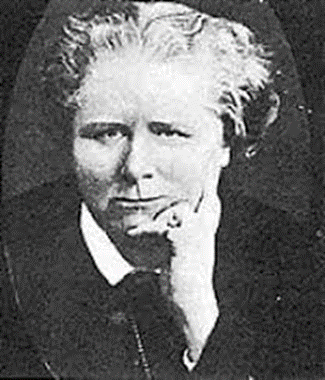
Today I am celebrating Frances Power Cobbe.
In my novel, Frances Power Cobbe appears as the ancestor of Dr. Cobbe, professor of women’s studies at Barnard College. At the end of the first class of Women in History, Dr. Cobbe says to her students that becoming aware of issues is the first step, and she hopes they will each take up a cause as part of their life’s work. She quotes one of her relatives in Ireland, Frances Power Cobbe who liked to say, “Every woman who has any margin of time or money to spare should adopt a public interest, a philanthropic undertaking or a social reform, and give to that cause whatever time and work she may be able to afford.”
Later in the semester, Joan (the point of view character in the novel), has a meeting with President Barrows, which reduces Joan to tear. Dr. Cobbe found her crying on the steps of Millbank Hall, and becomes her guardian dragon. But Joan is ambivalent about that. She put her trust in another faculty member, only to have that trust trampled. But Joan is desperate, and decides she is going to have to take a risk and trust Dr. Cobbe, because she doesn’t know what else to do. When Joan gets to her office, she figures out why Dr. Cobbe smells so funny.
Dr. Cobbe is a cat lady. She only has two cats now. She used to have five. She brings both of her cats to the office with her. Her office is littered with cat toys. She noticed me staring, laughed and said, “I come by it honestly. I was named for my late cousin, Frances Power Cobbe, a suffragette and anti-vivisectionist back home in Ireland.” She said an anti-vivisectionist supports science and research, but not in ways that harm animals. Dr. Cobbe brings her cats with her on her long teaching days. That’s nice, but the kitty litter box needs changing.
So, who is this Frances Power Cobbe, ancestor of my fictional Professor Cobbe?
Frances Power Cobbe was born in Dublin on 4th December 1822. Cobbe was educated at home, except for two years at a school in Brighton. According to her biographer, Barbara Caine: “Cobbe regarded her schooling as an interruption to her education and a complete waste of time. The noise, frivolity, pointless routine, and complete lack of intellectual stimulation contrasted strongly with her pleasurable life at home, spent in close contact with her accomplished and beloved mother.”
In the early 1860s, Frances moved to London where she earned her living by writing for newspapers and journals. In 1861, her articles about women’s rights brought her into contact with leading feminists such as Barbara Bodichon and Lydia Becker. She also became friendly with John Stuart Mill, who encouraged her in her writing. Cobbe also became a member of the Married Women’s Property Committee. 1867 she joined the London Society for Women’s Suffrage.
Cobbe was also involved in the campaign against vivisection. In 1870 she advocated strengthening the law on experiments on animals, and over the next few years became one of the leaders of the British anti-vivisection movement. It has been argued that there may have “been an identification on her part between man’s brutality to animals and his brutality to women.”
Women in Philosophy tells us that Frances Power Cobbe (1822-1904) was an Anglo-Irish reformer who wrote about moral theory and moral epistemology, religion, evolution, duties to animals, feminism, welfare, mind and body, unconscious thought and aesthetics. In 1897 the American suffragist Frances Willard said of Cobbe that ‘distinguished critical authorities have assigned her the rank of greatest among living English women’. Cobbe’s biographer Ellen Mitchell agrees: ‘By the last quarter of the nineteenth century, she was the most important British woman writer of intellectual prose’. Cobbe’s ideas were widely discussed–by Charles Darwin, John Stuart Mill and Henry Sidgwick amongst others. Yet after her death Cobbe fell rapidly out of view, as has so often been the case for philosophical women.
I read an article about Ella Josephine Baker that described her as the mother of the modern civil rights movement. That description got me thinking about what it means to mother something. Mothers give birth; they provide care, affection and kindness; they protect and nurture; they teach and encourage strength and resilience; they launch into the world. Even Ms. Baker’s nickname, “Fundi” is an acknowledgement of her proclivity to mothering. Fundi is a Swahili word that means g a person who teaches a craft to the next generation.
But who was this woman and how did she mother the civil rights movement?
Ella Josephine Baker was born on December 13, 1903 in Norfolk, Virginia. Her grandmother helped to lay the foundation for whom Ms. Baker was to become, teaching her values and a way of being in the world that prioritized social justice. Ella’s grandmother, Josephine Elizabeth “Bet” Ross, was born an enslaved person. She endured being beaten and whipped rather than marry an enslaved man chosen by her owner. Ella learned the importance of knowing who you are and standing up for your beliefs and your values as a human being, even in the face of tremendous cost.
Ms. Baker graduated from Shaw University in Raleigh, North Carolina with valedictorian honors. She then went on to work for the Worker’s Education Project of the Works Progress Administration, established under President Franklin D. Roosevelt’s New Deal, teaching courses in consumer education, labor history, and African history. She immersed herself in the cultural and political milieu of Harlem in the1930s, protesting Italy’s invasion of Ethiopia and supporting the campaign to free the Scottsboro defendants in Alabama. She also founded the Negro History Club at the Harlem Library.
In 1938, Ms. Baker began her long association with the National Association for the Advancement of Colored People (NAACP). She believed in egalitarian ideals and pushed the NAACP to decentralize its leadership structure and to aid its membership in more activist campaigns at the local level. Ms. Baker believed that the strength of an organization grew from the bottom up. Ms. Baker despised elitism. She believed that the bedrock of any social change organization is not its leaders ‘eloquence or credentials, but the commitment and hard work of the rank-and-file membership and their willingness and ability to engage in discussion, debate, and decision-making. She especially stressed the importance of young people and women in the organization.
In January 1957, Ms. Baker went to Atlanta to attend a conference aimed at developing a new regional organization to build on the success of the Montgomery bus boycott in Alabama. After a second conference in February, the Southern Christian Leadership Conference (SCLC) was formed.
In 1960, following a gathering of sit-in leaders to assess their struggles, and explore the possibilities for future actions, Ms. Baker returned to Shaw University to help found the Student Nonviolent Coordinating Committee, SNCC. Ms. Baker nurtured the awareness, growth and insight of individual SNCC members even as together they fostered the development of SNCC as an organization, building on Mahatma Gandhi’s practices of nonviolent direct action. In 1961, SNCC partnered with the Congress of Racial Equality (CORE) to organize in the Freedom Rides. Ms. Baker, and many of her colleagues, believed that voting was one key to freedom. She believed that if we do not exercise our collective voice, we are unable to influence the policies and laws that impact our lives. To be counted, we must be heard.
In 1964, SNCC helped create Freedom Summer, to focus national attention on Mississippi’s racism and to register black voters. With Ms. Baker’s guidance and encouragement, SNCC became one of the foremost advocates for human rights in the country.
When interviewed and questioned about her life, she was adamant about keeping her private life private. And, many women in the Civil Rights Movement followed her example, adopting a practice of covering their private lives that allowed them to function more freely as individuals in the movement. She believed that it was better for her to not be seen on television or in news stories. The kind of role that she tried to play was to pick up pieces or put together pieces out of which she hoped organization might come. Her belief was that strong people don’t need strong leaders.
Ms. Baker continued to be a respected and influential leader in the fight for human and civil rights until her death on her 83rd birthday, December 13, 1986.
In 1988, Dr. Bernice Johnson Reagon and Sweet Honey in the Rock recorded Ella’s Song
Ella’s Song Lyrics
We who believe in freedom cannot rest We who believe in freedom cannot rest until it comes
Until the killing of black men, black mothers’ sons Is as important as the killing of white men, white mothers’ sons
That which touches me most Is that I had a chance to work with people Passing on to others that which was passed on to me
To me young people come first They have the courage where we fail And if I can but shed some light as they carry us through the gale
The older I get the better I know that the secret of my going on Is when the reins are in the hands of the young, who dare to run against the storm
Not needing to clutch for power Not needing the light just to shine on me I need to be one in the number as we stand against tyranny
Struggling myself don’t mean a whole lot, I’ve come to realize That teaching others to stand up and fight is the only way my struggle survives
I’m a woman who speaks in a voice and I must be heard At times I can be quite difficult, I’ll bow to no man’s word
We who believe in freedom cannot rest We who believe in freedom cannot rest until it comes
Composed by Bernice Johnson Reagon, copyright: Songtalk Publishing Co.
And, in 2009, Ms. Baker was honored on a U.S. postage stamp.
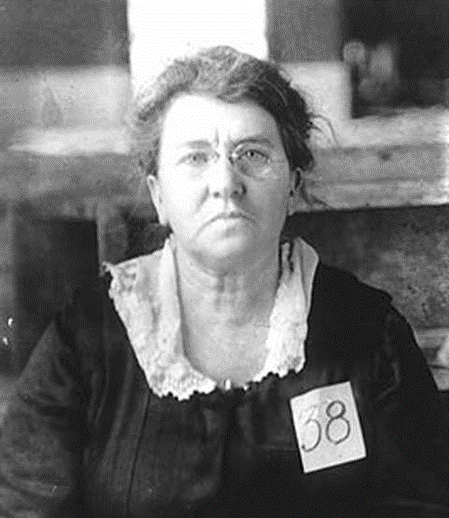
Emma Goldman championed women’s equality, free love, workers’ rights, free universal education regardless of race or gender, and anarchism. Yes, Emma Goldman was an anarchist, and in today’s political climate, anarchy has come to be associated with violence and chaos. And, yes, violence—principled violence was part of Emma Goldman’s arsenal of revolutionary actions. But, it was not her first or second choice. She believed in education and political action rather than violence. Emma Goldman was a woman of principles. For her, anarchy was a vehicle to liberty, harmony and social justice. It was her pathway to overcome inequality, repression and exploitation. Goldman defined anarchism as “the philosophy of a new social order based on liberty unrestricted by man-made law; the theory that all forms of government rest on violence, and are therefore wrong and harmful, as well as unnecessary.” believed free people would naturally form the most productive and just systems, entering into organizations strictly on their own accord. Goldman wrote “Anarchists do not only not oppose, but believe in organization as the result of a natural blending of common interests, brought about through voluntary adhesion, as the only possible basis of social life.”
One of the more iconic stories about Emma Goldman involves a party where she was dancing her heart out, enjoying herself, when a man chastised her, saying, “No agitator should dance, certainly not with such reckless abandon. Such undignified frivolity damages the dignity of our cause.” His impertinence infuriated Emma. She said, “Any cause that stands for beautiful ideals, for anarchism, for freedom from convention will not demand the denial of life and joy.. If I can’t dance, I won’t be part of your revolution.” That quote has always delighted me. In my heart, I picture Emma Goldman as a bright-eyed, enthusiastic young woman that she was when she came to the United States. And I choose to believe that she remained that woman in her heart. But have a look at this timeline of events in her life that I discovered in the Jewish Women’s Archive. Emma Goldman was a feisty, fearless fighter. She did not always win. But she was principled, and she kept up the fight, with principles and integrity, no matter the cost.
Under surveillance for much of her adult career, Goldman was arrested so often that she began to carry a book wherever she went, for fear of sitting in jail with nothing to read. According to her autobiography, when she asked once why she had been arrested, the police officer replied simply, “Because you’re Emma Goldman. Anarchists have no rights in this community, see?”
Combined timeline and rap sheet, compiled by the Jewish Women’s Archive and the Emma Goldman Papers Project
1869, June 27 Emma Goldman was born in Kovno, Lithuania, to Taube (Bienowitch) and Abraham Goldman.
1885: She immigrated to the United States with sister Helena. They settled in Rochester, New York.
1887: The execution of four anarchists unjustly convicted of bombing a labor rally in 1886 sparks Goldman’s political awakening
1889: Emma moved to New York City’s Lower East Side, where she met many prominent anarchists, including Alexander Berkman and Johann Most; the next year, she delivered the first of countless public lectures.
1893: August 30: Cause of Arrest: Incitement to Riot. With the nation in a deep economic depression, Emma Goldman is arrested and charged with inciting a riot during a New York City speech to unemployed workers on August 21. Goldman is tried, found guilty, and sentenced to one year in the Blackwell’s Island penitentiary — on the island today known as Roosevelt Island, in New York’s East River.
1895: Emma trained as a nurse in Vienna.
1897: September 7: Cause of Arrest: Open-Air Speaking. Goldman is arrested in Providence, Rhode Island, when she attempts to speak in public, after the mayor has warned her not to deliver any more open-air speeches. After keeping Goldman in jail overnight, the Providence authorities order her to leave town or face a three-month prison term.
1901: September 10: Cause of Arrest: Inciting the Assassination of President McKinley. Goldman is arrested in Chicago under suspicion of having something to do with President William McKinley’s assassination in Buffalo, New York, four days earlier. She had met assassin Leon Czolgosz at one of her lectures. The Chicago police interrogate Goldman and her bail is set at $20,000 (over $400,000 in today’s dollars). She will be released two weeks later, and the case will be dropped for lack of evidence.
1903: January 27: Cause of Arrest: Being a Suspicious Person. The year after New York passes an anti-anarchism law, Goldman and Max Baginski are arrested in New York City for being “suspicious persons.” They are questioned and released.
1903: Emma becomes involved in the Free Speech League in New York City in response to the passage of anti-anarchist laws.
1906: Emma founds Mother Earth magazine; later publishes numerous articles and lectures, including Anarchism and Other Essays (1910) and The Social Significance of the Modern Drama (1914).
1906: October 30: Cause of Arrest: Incendiary Articles and Incitement to Riot. Along with nine other people, Emma Goldman is arrested in New York City for articles published in her Mother Earth magazine, and for inciting to riot. She pays the $1,000 bail for her release and pleads not guilty to charges of criminal anarchy. On January 9, 1907, a grand jury dismisses the case.
1907: January 6: Cause of Arrest: Public Expression of “Incendiary Sentiments”. New York City’s Anarchist Police Squad arrests Goldman during a public lecture on “False and True Conceptions of Anarchism.” The case will later be dismissed.
1908: December 13: Cause of Arrest: Attempting to Speak. Seattle authorities arrest Goldman after someone breaks in to a locked lecture hall to allow the room to be used for a meeting with Goldman. The police release her on the condition that she leave town.
1908: December 14: Cause of Arrest: Planning to Speak. With her reputation preceding her, Goldman is arrested in Bellingham, Washington, before she can deliver a planned lecture. The next day, authorities send her away on a Canada-bound train.
1909: January 14: Cause of Arrest: Conspiracy Against the Government. After two weeks of uneventful Goldman lectures in California, San Francisco police arrest Goldman with Ben Reitman and charge them with conspiring against the government. Supporters who protest the arrest are disbanded by police the next day, but Goldman remains locked up until January 18. On the 28th, authorities drop the charges against her.
1910: early April: Cause of Arrest: Speaking. In the midst of a large, successful national lecture tour, Goldman and Reitman arrested by police in Cheyenne, Wyoming during an open-air meeting.
19193: May 20: Cause of Arrest: Arrival in San Diego. A year after being attacked by vigilantes when they arrived at the San Diego train station during a battle over free speech there, Goldman and Reitman return to the city — only to be arrested as soon as they arrive. Police send them on the afternoon train to Los Angeles.
1915: August 6: Cause of Arrest: Distributing Birth Control Information. In Portland, Oregon on her annual lecture tour, Goldman is arrested with Ben Reitman for distributing information on birth control in defiance of the Comstock “Chastity” Laws. A friend posts the $500 bail; the next day, Goldman and Reitman pay a $100 fine and resume lectures in that city.
1916: February 11: Cause of Arrest: Lecturing on Birth Control. Goldman is arrested in New York City for delivering a January lecture on birth control. She is tried in April; after being convicted, she opts to spend fifteen days in the Queens County Penitentiary instead of paying a $100 fine.
1916: October 20: Cause of Arrest: Distributing Birth Control Information. Emma Goldman goes to court in New York City to testify on behalf of a fellow birth-control advocate, and is arrested herself. She is released on a $500 bond and will be acquitted of the charge on January 8, 1917.
1917: Co-founds No-Conscription League.
1917: June 15: Cause of Arrest: Conspiracy to Violate the Draft Act. The U.S. entered World War I in April 1917; since then, Goldman has been lecturing against military conscription and the war. The same day that President Woodrow Wilson signs the Espionage Act, which in part prohibits interfering with the draft, federal agents arrest Goldman and Alexander Berkman in New York City. They are later indicted for conspiring to violate the Draft Act. Goldman pleads not guilty and is freed on $25,000 bail; rumors spread that her bail has been paid by the German enemy. In early July, she and Berkman are both found guilty and sentenced to serve two years in jail and pay a $10,000 fine. Goldman is incarcerated in a federal penitentiary in Jefferson City, Missouri. When her case is appealed to the U.S. Supreme Court, Goldman is returned to New York City and again released on bail. After losing her appeal in January 1918, Goldman is returned to Missouri to serve her two-year sentence.
1919: September 12: Cause of Arrest: Questionable Immigration Status. Federal officials review Goldman’s immigration status and decide she can be deported legally. They serve Goldman with a warrant for her arrest and deportation while she is serving the final few weeks of her prison sentence in Missouri. After a bond of $15,000 is posted, Goldman returns to New York to organize her appeal. In October, Goldman claims U.S. citizenship from her brief marriage to Jacob A. Kersner in 1887. But Labor Department officials order Goldman’s deportation in late November, and in early December she and Berkman are held at Ellis Island in New York harbor, and on the 21st of that month they board a Russia-bound ship.
1919: Deported to Soviet Russia with 248 other alien radicals.
1928: After intermittent visits across Europe and Canada, settles in Saint-Tropez, France.
1931: Publishes autobiography, Living My Life.
1932: Lectures on the imminent dangers of fascism and the rise of Nazism, first in England and later in the United States and Canada.
1934: After many efforts, secures visa and returns to the United States for a 90-day lecture tour.
1936—1938: Works with the anarchist trade union (CNT-FAI) to fight fascism and build new society during the Spanish Civil War.
1940: February, Goldman suffered a stroke that left her unable to speak. She died on May 14, 1940, at age 70, in Toronto, Canada. The U.S. Immigration and Naturalization Service allowed her body to be re-admitted to the United States, where she was buried in Chicago near the Haymarket anarchists who had so inspired her. Thousands of mourners flocked to see her casket, and tributes poured in from every corner of the world.
Oh, Emma. We miss you. We need someone to teach us how to dance again.
[Today I thought I would share an excerpt from my novel, “Letters from Eleanor Roosevelt” with you. To be clear, the letter is fictional, but the information within it about Emily Green Balch is historically accurate.]
As I was walking home, I thought about women I have known who have worked for peace, and my dear friend Emily Greene Balch came to my mind. In 1946, only a year after Franklin died, Emily was awarded the Nobel Peace Prize. How I wish that Franklin had been in office to acknowledge Emily’s work. But Truman would have none of it. He regarded anyone involved with the Women’s International League for Peace and Freedom as too radical to cast their shadow across the doors of the White House.
Our dear Emily had more than her share of professional struggles. In 1919 she was on leave from Wellesley College and put in to extend her leave to continue her work with the International Congress of Women. The Board of Trustees at Wellesley choose to terminate her contract instead. Eva, Emily was a popular professor and one of the more productive scholars on the faculty. But, I suspect she was a bit too outspoken an advocate of peace for those men. I suspect they were looking for an excuse to be rid of her.
Emily was disconsolate—for a moment. But then she marched herself to the Women’s International League for Peace and Freedom, much as I did with the American Association for the United Nations. WILPF elected her their secretary and treasurer, and she continued her work for peace with vigor, even though her health was declining.
Eva, as I remembered Emily, I wanted to reread her Nobel Prize Lecture, Toward Human Unity or Beyond Nationalism, which she delivered on April 7, 1948. Here are some of my favorite passages from that lecture.
She considered the unifying and divisive trends that she has observed in our world:
Not only democracy and the cult of humaneness mark our age, but also greed, violence, the self-adulation of national and racial groups, the fanaticism of political cults like fascism or Nazism, the glorification of might and power for their own sake, the blind reliance on violence as that before which all idealism is but a dissolving mist. All these things we know only too well.
She went on to discuss the peace movement in its individual and political efforts, its work to educate and to build institutions and to affect governmental action on concrete issues. I found great solace and direction in her concluding comments:
We are not asked to subscribe to any utopia or to believe in a perfect world just around the corner. We are asked to be patient with necessarily slow and groping advance on the road forward, and to be ready for each step ahead as it becomes practicable. We are asked to equip ourselves with courage, hope, readiness for hard work, and to cherish large and generous ideals.
I will enter this new chapter in my life with courage and hope, ready for hard work, open to joy where it may shine, cherishing the ideals of service and human rights based on respect for human dignity. . . .





 JustAlchemy