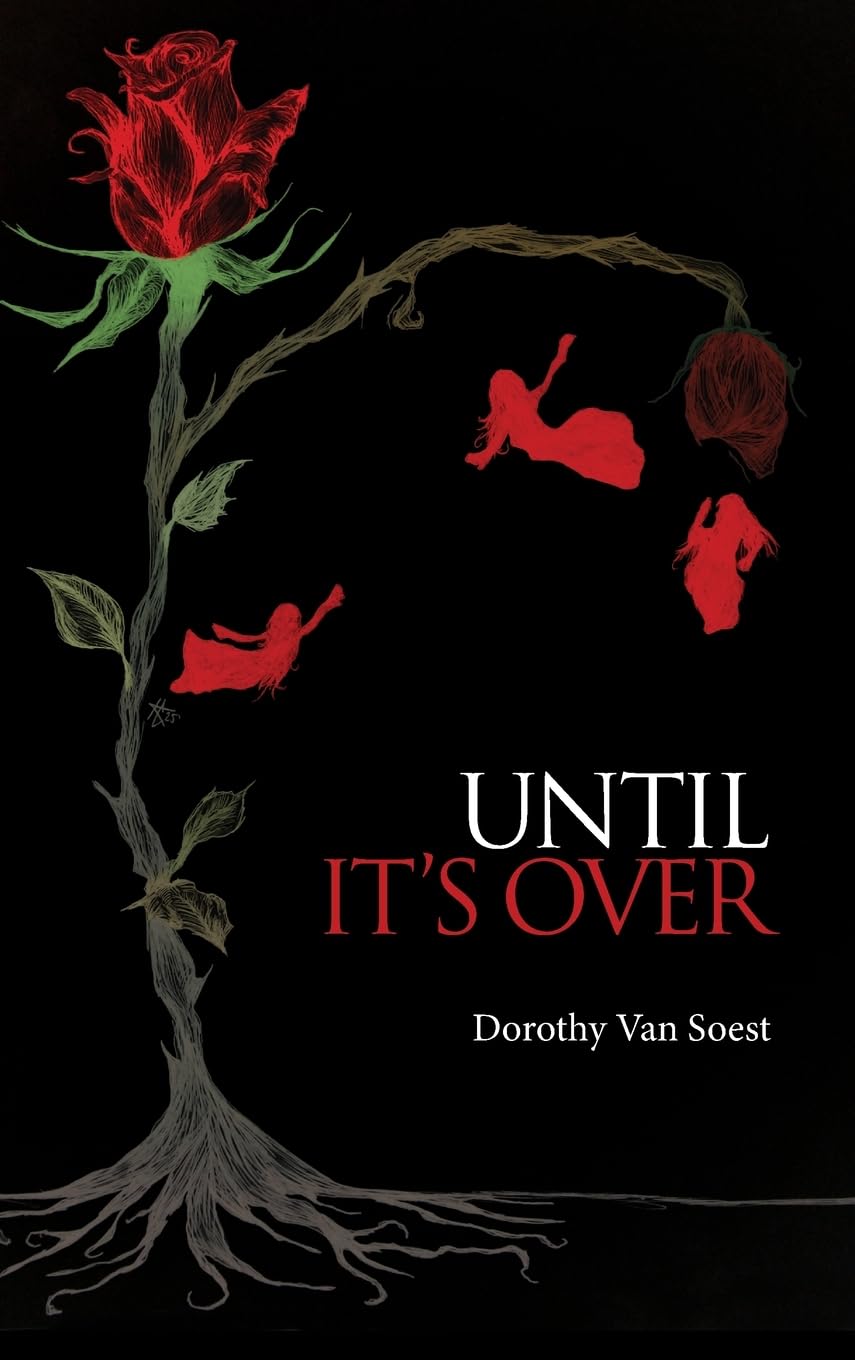
Until It’s Over by Dorothy van Soest

I don’t usually post book reviews here, but I couldn’t help myself with this one!

I just finished reading Until It’s Over by Dorothy van Soest, and what a delight. One of the joys of reading a book series is seeing what adventures your old friends are up to, and I will say, Sylvia Jenson, the protagonist in Dorothy van Soest’s novels, never disappoints.

In Until It’s Over, Sylvia, now feeling her age, and her longtime friend JB Harrell attend a rally organized by Peter Minter, an Ojibwe elder, protesting Midwest Mining Company’s uranium mining on Indian lands. Sylvia expects Peter to be the primary speaker at the rally. Instead, Peter introduces Anthony Jordane, who is running for the US Senate. Jordane pledges to make the prohibition of uranium mining a key issue in his campaign platform and a primary focus of his work when he is elected to the Senate. Sylvia reacts to Jordane, shouting, “Oh my God! What the hell is he doing here?” As Jordane speaks, Sylvia cries out, “NO! Liar! Bastard! No! NO! NO!” And she collapses in cardiac arrest.

How it that for a gripping first 10 pages!

The novel unfolds with JB working to understand Sylvia’s virulence towards Jordane, interwoven with flashbacks of Sylvia’s youth when she knew Jordane in high school. If you have been following the series (and if you haven’t been, you should! Each novel is a delight in its own right), the flashbacks reveal the birth of some demons that haunt Sylvia. The novel also shows Sylvia at her investigative best, as she works to reveal the truth about Anthony Jordane.

There will be no spoilers here, so I will not say more than Dorothy van Soest has crafted an exquisitely elegant, pitch perfect conclusion. This is the work of an author at the top of her craft.

I highly recommend this novel to you! And I urge you to plan your time wisely as to when you will begin reading it, because you will not want to put it down.

Who are you?

I’m reading Braving the Thin Places: Celtic Wisdom to Create a Space for Grace by Julianne Stanz. It may be a little too “capital C” Catholic for my preference at the moment, but it is none the less a splendid book, rich with prompts that inspiration self-reflection. It is the Celtic version of spiritual Japanese Kintsugi, the art of repairing broken pottery with gold, a process that transforms the damaged areas into streams of strength and resilience marking the paths of our learning and growth.

In the first chapter, Julianne Stanz poses the question, “who are you?” She reflects on a moment when one of her teachers asked her, “who are you?” and then encouraged her to go beyond behaviors, beyond relationships, beyond the choices we make, even while recognizing that those are important elements within our story.

Reading those lines in the book, I couldn’t help but remember how I used that very question as an icebreaker in so many of the courses that I taught in Human Behavior. I remembered how I used that question as a blessing at the birth of one of the main characters in my novel, Letters from Eleanor Roosevelt. “Who are you?” is a question with deep resonance in my life.

Julianne Stanz’s teacher encourages her to dig deeper, to think about who she really is. There are some lines in the Celtic Kildare Poems that encourage us to always remember in our heart these three things related to the nature of our being:

Whence you come.

Who you are.

What shall become of you.

I believe that remembering those there things and reflecting on them has the potential to carry us deeper into self-awareness. Now, to be honest, committing to self-awareness is tricky. There can be a fine line between self-awareness and self-centeredness. But especially for women of a certain age, walking on the right side of that line is a journey worth taking. I remember my early days dancing on the fringes of the second wave of feminism, and my growing awareness of how our culture socialized women to be selfless. It’s hard to be self-centered when you are self-less. it’s also hard to be self-aware when you are self-less. For many of women, finding and nurturing a healthy sense of self is necessary.

And then because my brain is my brain, I remembered the Zen koan, “What is your original face? What is the face you had before you were born?” A koan intended to set the meditator on a quest to encounter a deeper understanding of oneself, a quest to engage with one’s true, unconditioned nature. Not to give away the answer, but some writings say that our original nature is luminous, and pure, unbound by any specific form or possession.  

What is your original face? What is the nature of your self? Who are you? I say each and every one of us is pure, luminous love. I say we, and all of creation, come from love. We are called to live love, and we will return to love. Not love the flighty emotion, but love the active verb. The Love that sees the goodness in self, others and all of creation. The Love that wills and acts to enable that goodness to grow. That’s who I think you are, and I am too.