Frances Power Cobbe Woman of Substance

My novel, Letters from Eleanor Roosevelt, is littered with mentions of strong women who shaped history in large and small ways, ways that for the most part have been erased or ignored. So, in this blog I have taken to celebrating those women and their contributions to our world.

Today I am celebrating Frances Power Cobbe.
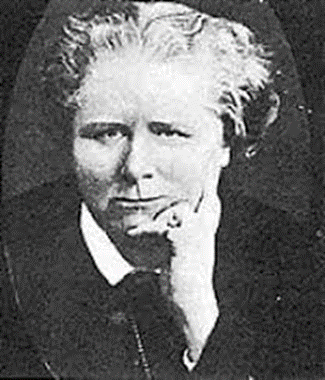
In my novel, Frances Power Cobbe appears as the ancestor of Dr. Cobbe, professor of women’s studies at Barnard College. At the end of the first class of Women in History, Dr. Cobbe says to her students that becoming aware of issues is the first step, and she hopes they will each take up a cause as part of their life’s work. She quotes one of her relatives in Ireland, Frances Power Cobbe who liked to say, “Every woman who has any margin of time or money to spare should adopt a public interest, a philanthropic undertaking or a social reform, and give to that cause whatever time and work she may be able to afford.”

Later in the semester, Joan (the point of view character in the novel), has a meeting with President Barrows, which reduces Joan to tear. Dr. Cobbe found her crying on the steps of Millbank Hall, and becomes her guardian dragon. But Joan is ambivalent about that. She put her trust in another faculty member, only to have that trust trampled. But Joan is desperate, and decides she is going to have to take a risk and trust Dr. Cobbe, because she doesn’t know what else to do. When Joan gets to her office, she figures out why Dr. Cobbe smells so funny.

Dr. Cobbe is a cat lady. She only has two cats now. She used to have five. She brings both of her cats to the office with her. Her office is littered with cat toys. She noticed me staring, laughed and said, “I come by it honestly. I was named for my late cousin, Frances Power Cobbe, a suffragette and anti-vivisectionist back home in Ireland.” She said an anti-vivisectionist supports science and research, but not in ways that harm animals. Dr. Cobbe brings her cats with her on her long teaching days. That’s nice, but the kitty litter box needs changing.

So, who is this Frances Power Cobbe, ancestor of my fictional Professor Cobbe?

Frances Power Cobbe was born in Dublin on 4th December 1822. Cobbe was educated at home, except for two years at a school in Brighton. According to her biographer, Barbara Caine: “Cobbe regarded her schooling as an interruption to her education and a complete waste of time. The noise, frivolity, pointless routine, and complete lack of intellectual stimulation contrasted strongly with her pleasurable life at home, spent in close contact with her accomplished and beloved mother.”

In the early 1860s, Frances moved to London where she earned her living by writing for newspapers and journals. In 1861, her articles about women’s rights brought her into contact with leading feminists such as Barbara Bodichon and Lydia Becker. She also became friendly with John Stuart Mill, who encouraged her in her writing. Cobbe also became a member of the Married Women’s Property Committee. 1867 she joined the London Society for Women’s Suffrage.

Cobbe was also involved in the campaign against vivisection. In 1870 she advocated strengthening the law on experiments on animals, and over the next few years became one of the leaders of the British anti-vivisection movement. It has been argued that there may have “been an identification on her part between man’s brutality to animals and his brutality to women.”

Women in Philosophy tells us that Frances Power Cobbe (1822-1904) was an Anglo-Irish reformer who wrote about moral theory and moral epistemology, religion, evolution, duties to animals, feminism, welfare, mind and body, unconscious thought and aesthetics. In 1897 the American suffragist Frances Willard said of Cobbe that ‘distinguished critical authorities have assigned her the rank of greatest among living English women’. Cobbe’s biographer Ellen Mitchell agrees: ‘By the last quarter of the nineteenth century, she was the most important British woman writer of intellectual prose’. Cobbe’s ideas were widely discussed–by Charles Darwin, John Stuart Mill and Henry Sidgwick amongst others. Yet after her death Cobbe fell rapidly out of view, as has so often been the case for philosophical women.

Ella Josephine Baker, Mother of the Civil Rights Movement, Behind-the-Scenes Force of Nature

I read an article about Ella Josephine Baker that described her as the mother of the modern civil rights movement. That description got me thinking about what it means to mother something. Mothers give birth; they provide care, affection and kindness; they protect and nurture; they teach and encourage strength and resilience; they launch into the world. Even Ms. Baker’s nickname, “Fundi” is an acknowledgement of her proclivity to mothering. Fundi is a Swahili word that means g a person who teaches a craft to the next generation.

But who was this woman and how did she mother the civil rights movement?

Ella Josephine Baker was born on December 13, 1903 in Norfolk, Virginia. Her grandmother helped to lay the foundation for whom Ms. Baker was to become, teaching her values and a way of being in the world that prioritized social justice. Ella’s grandmother, Josephine Elizabeth “Bet” Ross, was born an enslaved person. She endured being beaten and whipped rather than marry an enslaved man chosen by her owner. Ella learned the importance of knowing who you are and standing up for your beliefs and your values as a human being, even in the face of tremendous cost.

Ms. Baker graduated from Shaw University in Raleigh, North Carolina with valedictorian honors. She then went on to work for the Worker’s Education Project of the Works Progress Administration, established under President Franklin D. Roosevelt’s New Deal, teaching courses in consumer education, labor history, and African history. She immersed herself in the cultural and political milieu of Harlem in the1930s, protesting Italy’s invasion of Ethiopia and supporting the campaign to free the Scottsboro defendants in Alabama. She also founded the Negro History Club at the Harlem Library.

In 1938, Ms. Baker began her long association with the National Association for the Advancement of Colored People (NAACP). She believed in egalitarian ideals and pushed the NAACP to decentralize its leadership structure and to aid its membership in more activist campaigns at the local level. Ms. Baker believed that the strength of an organization grew from the bottom up. Ms. Baker despised elitism. She believed that the bedrock of any social change organization is not its leaders ‘eloquence or credentials, but the commitment and hard work of the rank-and-file membership and their willingness and ability to engage in discussion, debate, and decision-making. She especially stressed the importance of young people and women in the organization.

In January 1957, Ms. Baker went to Atlanta to attend a conference aimed at developing a new regional organization to build on the success of the Montgomery bus boycott in Alabama. After a second conference in February, the Southern Christian Leadership Conference (SCLC) was formed.

In 1960, following a gathering of sit-in leaders to assess their struggles, and explore the possibilities for future actions, Ms. Baker returned to Shaw University to help found the Student Nonviolent Coordinating Committee, SNCC. Ms. Baker nurtured the awareness, growth and insight of individual SNCC members even as together they fostered the development of SNCC as an organization, building on Mahatma Gandhi’s practices of nonviolent direct action. In 1961, SNCC partnered with the Congress of Racial Equality (CORE) to organize in the Freedom Rides. Ms. Baker, and many of her colleagues, believed that voting was one key to freedom. She believed that if we do not exercise our collective voice, we are unable to influence the policies and laws that impact our lives. To be counted, we must be heard.

In 1964, SNCC helped create Freedom Summer, to focus national attention on Mississippi’s racism and to register black voters. With Ms. Baker’s guidance and encouragement, SNCC became one of the foremost advocates for human rights in the country.

When interviewed and questioned about her life, she was adamant about keeping her private life private. And, many women in the Civil Rights Movement followed her example, adopting a practice of covering their private lives that allowed them to function more freely as individuals in the movement. She believed that it was better for her to not be seen on television or in news stories. The kind of role that she tried to play was to pick up pieces or put together pieces out of which she hoped organization might come. Her belief was that strong people don’t need strong leaders.

Ms. Baker continued to be a respected and influential leader in the fight for human and civil rights until her death on her 83rd birthday, December 13, 1986.

In 1988, Dr. Bernice Johnson Reagon and Sweet Honey in the Rock recorded Ella’s Song

Ella’s Song Lyrics

We who believe in freedom cannot rest
We who believe in freedom cannot rest until it comes

Until the killing of black men, black mothers’ sons
Is as important as the killing of white men, white mothers’ sons

That which touches me most
Is that I had a chance to work with people
Passing on to others that which was passed on to me

To me young people come first
They have the courage where we fail
And if I can but shed some light as they carry us through the gale

The older I get the better I know that the secret of my going on
Is when the reins are in the hands of the young, who dare to run against the storm

Not needing to clutch for power
Not needing the light just to shine on me
I need to be one in the number as we stand against tyranny

Struggling myself don’t mean a whole lot, I’ve come to realize
That teaching others to stand up and fight is the only way my struggle survives

I’m a woman who speaks in a voice and I must be heard
At times I can be quite difficult, I’ll bow to no man’s word

We who believe in freedom cannot rest
We who believe in freedom cannot rest until it comes

Composed by Bernice Johnson Reagon, copyright: Songtalk Publishing Co.

And, in 2009, Ms. Baker was honored on a U.S. postage stamp.

Ella Josephine Baker is mentioned on page 60 of my novel, Letters from Eleanor Roosevelt. Which of course is available on Amazon https://www.amazon.com/Letters-Eleanor-Roosevelt-Mary-Swigonski-ebook/dp/B0B43YSWN2/

I’d love to hear from you.

What are your thoughts about Ella Josephine Baker? About mothering? About social justice?

Who are some of the women who inspire you? Why? How have they changed your thoughts, values or way of being in the world?